Powerball's $1.04 Billion Winner in Illinois: Numbers, Taxes, and the Road Ahead
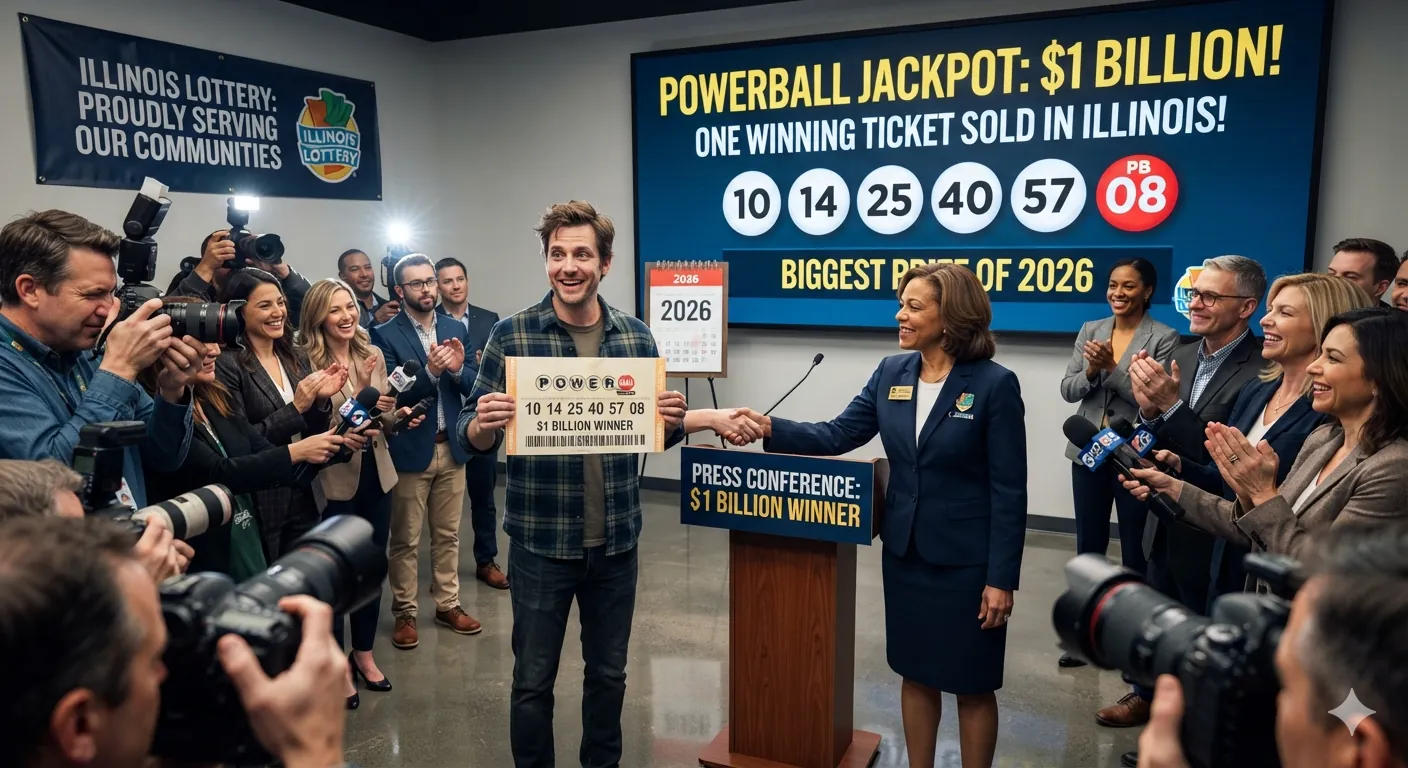
Wednesday, August 12, 2026, ended a long wait for Powerball players across the United States and, for the first time ever, in the United Kingdom. After 43 consecutive drawings with no jackpot winner — the longest dry stretch of the year — a single ticket bought in Illinois matched every number drawn and won a $1.040 billion annuity, the biggest lottery prize of 2026. By Thursday morning, the identity of the winner remained a mystery, and the ticket itself was still sitting somewhere in Quincy, Illinois, unsigned and unclaimed.
The jackpot had been advertised at roughly $1 billion heading into the night, but late sales pushed the final figure higher: $1.040 billion for the annuity, with a cash option of $450.5 million, up from the $433.1 million cash estimate posted before the draw. Both totals are before taxes. The result makes Wednesday's prize the largest of 2026, the eighth-biggest Powerball jackpot ever, and the 15th billion-dollar jackpot across Powerball and Mega Millions combined. For the millions who bought tickets during the two-month run, the suspense is over. For the person holding the ticket, the real decisions are only beginning.
The Draw at a Glance
The Night a Billion-Dollar Ticket Finally Appeared
Powerball's drawings take place three evenings a week — Monday, Wednesday and Saturday at 10:59 p.m. Eastern — and each one had failed to produce a jackpot winner since the start of May. On August 12 the machine finally cooperated: the white balls drawn were 4, 26, 66, 67 and 69, and the red Powerball came up 9. The Power Play multiplier drawn alongside them was 2x. One ticket, bought in Illinois, carried the complete sequence.
Illinois Lottery officials confirmed the ticket's origin at the Hy-Vee Fast & Fresh on North 36th Street in Quincy, a river town on the Mississippi. This is the third time a Powerball jackpot has landed in Illinois; the previous win came in 2013. Because Illinois permits winners of prizes above $250,000 to claim anonymously, no one outside the winner's inner circle knows who holds the ticket yet. Lottery officials are asking anyone who bought a ticket in the Quincy area to check it carefully — more than three million tickets won cash prizes of some kind in Wednesday's drawing by matching at least one number, so a fair number of players have a small deposit coming.
What the Headline Number Really Means
The advertised $1.040 billion is the annuity form of the prize — 30 graduated payments spread over 29 years. The cash option, which past winners have overwhelmingly chosen, is $450.5 million before federal withholding, federal income tax and any state tax. The sticker price and the bank deposit are very different numbers.
How the Jackpot Snowballed: A 43-Draw Climb From $20 Million
This run started small. The most recent jackpot before Wednesday was claimed on May 2, when tickets sold in Florida and Texas split a $20 million prize. In the drawing before that, single tickets in Indiana and Kansas shared a $143.4 million pot. From there the prize rolled over, drawing after drawing, for more than two months — and with each rollover, the next headline figure grew and the crowds at the counters got bigger.
Sales numbers capture the arc. Stephen Durrell, chair of the Powerball Product Group and executive director of the Kansas Lottery, noted that one Monday drawing saw ticket sales jump more than 86 percent compared with the Monday of the week before, as the prize closed in on the billion mark. Durrell described the run this way:
"The growth of this jackpot reflects an extraordinary level of player interest." Stephen Durrell, Chair of the Powerball Product Group and Executive Director of the Kansas Lottery
There is a structural reason these mega-jackpots keep arriving. Powerball lengthened its odds in 2015, and since then the game has averaged six to nine jackpot winners a year while all ten of its largest prizes have come after the change. Longer odds mean longer rollovers, and longer rollovers mean more enormous advertised totals. The last comparable win came on Christmas Eve 2025, when a ticket sold in Arkansas won $1.817 billion.
| Date | What Happened |
|---|---|
| May 2, 2026 | Florida and Texas tickets split the last jackpot before the run, $20 million |
| May – Aug. 2026 | Prize rolls over through 43 consecutive Wednesday, Saturday and Monday drawings |
| July 21, 2026 | Powerball tickets go on sale in the United Kingdom for the first time |
| Aug. 10, 2026 | Monday drawing ends without a winner; jackpot reaches $1 billion for Wednesday |
| Aug. 12, 2026 | A Quincy, Illinois ticket wins the $1.040 billion jackpot |
What the Winner Gets: The Real Numbers
The winner's first decision is the biggest one: take the annuity or the cash. The annuity delivers the full $1.040 billion as 30 graduated payments paid out over 29 years, with each payment rising 5 percent from the previous one. The cash option delivers $450.5 million immediately. Both numbers are pre-tax. Winners have consistently chosen the lump sum, and the reasoning is simple — the annuity's advertised total already assumes the money earns returns over three decades, so waiting does not produce a larger headline number.
The tax picture is where the headline starts to shrink. The IRS withholds 24 percent of a lump-sum win upfront, and because the payment pushes the winner into the top brackets, the effective federal rate can reach 37 percent. Illinois then applies its flat 4.95 percent income tax. An analysis cited by NewsRadio 1080 KRLD estimated the Illinois winner's cash take-home at roughly $260 million after the 37 percent federal rate and the state tax were both applied. The Independent worked through the arithmetic using Powerball's earlier $1 billion estimate: a $422.3 million lump sum falls to about $320 million after the 24 percent withholding, and to about $266 million once marginal rates are factored in. These figures rest on assumptions about the winner's other income and deductions, so the true take-home will vary with each individual's circumstances.
Where the ticket is bought matters as much as what is drawn. A USA Mega analysis reported by The Hill found that a winner in a state with no lottery tax — California, Florida, New Hampshire, South Dakota, Tennessee, Texas, Washington and Wyoming — could keep roughly $631.3 million of the $1 billion annuitized prize, or about $272.9 million if taking the cash option. In other states the annuitized figure ranged from about $522.3 million in New York to about $596.3 million in Kentucky. Across 31 states, taxes cut the prize below $600 million.
| Scenario (Based on $1B Estimate) | Annuity Take-Home | Cash Take-Home |
|---|---|---|
| No-lottery-tax states (CA, FL, NH, SD, TN, TX, WA, WY) | ~$631.3M | ~$272.9M |
| Kentucky | ~$596.3M | — |
| New York | ~$522.3M | — |
| Illinois winner (37% federal + 4.95% state) | — | ~$260M |
Meet the Other Winners
Wednesday's results were not only about the jackpot. A separate seven-figure winner came out of Massachusetts, where a player matched all five white balls and, having paid the extra dollar for Power Play, collected $2 million instead of $1 million. Four other tickets — one each in Arizona, Florida, North Carolina and California — matched five numbers for the standard $1 million Match 5 prize. All told, more than three million tickets won prizes of one level or another.
California runs its own arithmetic. Because prize payouts there are pari-mutuel — calculated from sales and the number of winners — the state's Match 5 ticket did not pay a flat $1 million. Instead, a ticket bought at an ARCO ampm on Fair Oaks Boulevard in the Arden-Arcade area of Sacramento, just north of the Watt Avenue bridge over the American River, was worth $820,520 for five white balls without the Powerball, against odds of roughly 1 in 11.7 million. A near-miss that still clears $800,000.
| Wednesday's Prize Breakdown (Aug. 12, 2026) | Winners | Prize | Power Play Winners | Power Play Prize |
|---|---|---|---|---|
| 5 main + Powerball | 1 (IL) | $1.04B jackpot | — | — |
| 5 main | 4 | $1,000,000 | 1 (MA) | $2,000,000 |
| 4 main + Powerball | 70 | $50,000 | 16 | $100,000 |
| 4 main | 1,643 | $100 | 425 | $200 |
| 3 main + Powerball | 4,076 | $100 | 983 | $200 |
| 3 main | 102,634 | $7 | 26,831 | $14 |
| 2 main + Powerball | 88,313 | $7 | 23,158 | $14 |
| 1 main + Powerball | 692,345 | $4 | 182,013 | $8 |
| Powerball only | 1,684,081 | $4 | 445,306 | $8 |
How to Play and What It Costs
For anyone who missed this run, the entry point is simple. A ticket costs $2 in the United States and its territories, and an extra $1 adds Power Play, which multiplies non-jackpot prizes — up to 10 times when the 10X multiplier is active. The game is sold in 45 states, the District of Columbia, Puerto Rico, the U.S. Virgin Islands and, since July 21, the United Kingdom.
The odds deserve respect. Matching all six numbers carries a probability of 1 in 292,201,338 — roughly the same likelihood as being struck by lightning, which is to say: plan no celebrations in advance. The chance of winning any prize at all, however, is about 1 in 24.87 in the U.S., and that stream of $4 and $7 returns is what keeps the machine running. The full U.S. payout structure, alongside the U.K. version, looks like this:
| Numbers Matched | U.S. Payout | With Power Play (Sample) | U.K. Payout |
|---|---|---|---|
| 5 main + Powerball | Jackpot | Jackpot | Jackpot |
| 5 main | $1,000,000 | $2,000,000 | £1,000,000 |
| 4 main + Powerball | $50,000 | $100,000–$500,000 | £33,000 |
| 4 main | $100 | $200–$1,000 | £1,100 |
| 3 main + Powerball | $100 | $200–$1,000 | £500 |
| 3 main | $7 | $14–$70 | £52.10 |
| 2 main + Powerball | $7 | $14–$70 | £30.80 |
| 1 main + Powerball | $4 | $8–$40 | £15.30 |
| Powerball only | $4 | $8–$40 | £11.90 |
| 2 main | N/A | N/A | £8 |
Why This Jackpot Made History
Wednesday's prize takes the eighth spot on the all-time Powerball list, in a record book that has been rewritten at an accelerating pace. The $2.04 billion jackpot won on November 7, 2022 in California still holds the top spot, followed by the $1.817 billion Arkansas win on Christmas Eve 2025. Three of the ten largest jackpots have been won within the past twelve months, including this one — a cadence that did not exist a decade ago.
| Place | Prize | Win Date | Winning Location |
|---|---|---|---|
| 1 | $2.04 billion | Nov. 7, 2022 | California |
| 2 | $1.817 billion | Dec. 24, 2025 | Arkansas |
| 3 | $1.787 billion | Sept. 6, 2025 | Missouri & Texas |
| 4 | $1.765 billion | Oct. 11, 2023 | California |
| 5 | $1.586 billion | Jan. 13, 2016 | California, Florida & Tennessee |
| 6 | $1.326 billion | April 6, 2024 | Oregon |
| 7 | $1.08 billion | July 19, 2023 | California |
| 8 | $1.040 billion | Aug. 12, 2026 | Illinois |
| 9 | $842.4 million | Jan. 1, 2024 | Michigan |
| 10 | $768.4 million | March 27, 2019 | Wisconsin |
A big part of that acceleration happened exactly three weeks before the drawing. Powerball went on sale in the United Kingdom on July 21, 2026, making Wednesday's prize the first jackpot that British players were ever eligible to win. Andy Carter, senior winners' advisor at Allwyn, which operates the U.K.'s National Lottery, framed the milestone this way:
"It's a chance to win the biggest jackpot ever offered through The National Lottery and to dream bigger than ever before." Andy Carter, Senior Winners' Advisor, Allwyn (U.K. National Lottery)
Carter described Powerball's arrival as bringing "a whole new level of possibility" to U.K. players. There is a catch in the fine print: British players play for a prize structure denominated in pounds, not dollars, but the headline jackpot itself is always paid in U.S. dollars no matter where the winning ticket is bought. In the U.K., a ticket with the five main numbers is worth £1,000,000, and landing four main numbers plus the Powerball returns £33,000. The odds of winning any prize are friendlier across the Atlantic — about 1 in 14 for U.K. players versus 1 in 24.87 in the U.S. — and U.K. players have nine ways to win beyond the jackpot, one more than the American format offers.
If You're Holding a Winning Ticket
The advice lottery officials hand out after every major draw applies here with extra weight: put your signature on the back of the ticket without delay and keep it in a secure place. A winning Powerball ticket is a bearer instrument — whoever holds it can claim it — and a slip of paper worth $1.04 billion deserves to be treated like the asset it is.
Claiming rules vary by state. California winners have 180 days from the drawing to claim a Powerball prize. Texas gives winners the same 180-day window, with tickets presented for payment and formally approved by lottery officials before they are valid. Illinois, for its part, permits winners of prizes above $250,000 to claim anonymously, which is why the winner's name may never become public. Not every state offers that shield — California, for instance, requires winners' names to be released to the public. Before making any move, financial and legal advisors say: assemble counsel, a tax specialist and a financial planner, and keep the news to yourself for as long as the law allows.
A sudden windfall is rarely a solo event. Retirees make up a large share of regular lottery players, and winners commonly set aside part of their money for aging family members — covering medical supervision, daily assistance and structured programs that keep a loved one engaged during working hours. Families juggling jobs and caregiving frequently turn to adult medical day care services to provide nursing oversight, meals, transportation and social activities for an older relative while they are at work.
Andrew Stoltmann, a Chicago attorney who has represented a dozen lottery winners — several of whom watched fortunes disappear into bad investments, reckless spending and demanding relatives — put the post-win period in blunt terms:
"Unfortunately, the people who win the lottery think at that point, the journey is over. And what they don't realize is that the journey has really just begun." Andrew Stoltmann, Attorney who has represented 12 lottery winners
A separate caution about unclaimed tickets is playing out in California. Lottery officials are asking players to hunt for a $1.53 million Powerball prize won in San Diego County on February 21 — numbers 27, 28, 36, 48 and 49, missing the Powerball 21 — sold at Varso Gas on the corner of Escondido Boulevard and Brotherton Road in Escondido. The 180-day claim window closes August 20, 2026; after that, the money goes to California public schools by statute. That is not a small sum in aggregate: the California Lottery has funneled more than $1.1 billion to public schools from unclaimed prizes since 1985, including $44.9 million in the last fiscal year. Anyone who bought a ticket at Varso Gas should dig through the glove box, the junk drawer and the laundry basket — a five-number match at 1 in 11.7 million odds deserves better than an expiration date.
What's Next: Back to $20 Million
For everyone outside the winner's circle, the cycle restarts immediately. The next drawing is Saturday at 10:59 p.m. Eastern, and the estimated jackpot resets to about $20 million. Ticket-buying intensity will drop sharply — until the next rollover streak begins. One small change: because the advertised prize now sits below $150 million, the Power Play 10X multiplier is back in play for Saturday's draw.
Durrell's broader point during the run is worth carrying into the quiet weeks. A portion of every $2 ticket stays in the state where it was purchased, and that money funds public programs and services:
"This is the most exciting jackpot run we've seen all year, but it's also important to remember that every $2 Powerball ticket purchased helps support public programs and services. Because a portion of each ticket sold stays where it was purchased, the benefits of Powerball are felt in communities across the country and around the world." Stephen Durrell, Chair of the Powerball Product Group and Executive Director of the Kansas Lottery
For the Illinois winner, there is no public deadline pressure beyond the state's claim rules, and anonymity buys time to get organized. For everyone else, the machinery of the next big jackpot is already turning. Billion-dollar prizes have been arriving more often for a decade, the United Kingdom is now feeding the player pool, and the game's organizers expect the records to keep falling. The next record run is probably already underway — it just has to survive a few dozen more drawings first.
Check your tickets, add your signature, and give them a safe home. Wednesday night delivered the reminder once more: a winning ticket can surface anywhere in the game — this time on a counter at a gas station on North 36th Street in Quincy, Illinois.